

 8801 Fast Park Dr Suite


Choosing wheelchair transportation requires more than finding an available vehicle. Confirm that the provider can safely accommodate the passenger, wheelchair, destination, and appointment schedule.
Families, caregivers, and case managers in Raleigh should review the vehicle, securement process, driver training, assistance level, scheduling, and payment options before booking. Use the following guide to compare providers offering non-emergency medical transportation in Raleigh, NC.
1. Confirm the Vehicle Has the Right Ramp or Lift
Ask whether the provider uses a ramp-equipped or lift-equipped vehicle. The correct option depends on the passenger’s wheelchair type, weight, dimensions, and ability to transfer.
Confirm the following details:
- Ramp or lift availability
- Maximum combined weight for the passenger and wheelchair
- Ramp width and slope
- Lift platform dimensions
- Interior clearance
- Door opening width
- Space for footrests, oxygen equipment, walkers, or other medical items
- Ability to transport a power wheelchair or scooter
Do not assume that every wheelchair-accessible van can accommodate every wheelchair. A standard manual chair may fit in a vehicle that cannot safely handle a large power chair or bariatric wheelchair.
Ask the provider for the exact weight and size limits. Provide the wheelchair’s approximate:
- Width
- Length
- Height
- Weight
- Turning radius, if known
Local accessibility standards can help families understand the type of equipment and clearance to ask about. Review the GoRaleigh Access Policies and Procedures Manual for examples of mobility-device access requirements. Private medical transportation providers may have different vehicle specifications, so confirm the details directly.

2. Check Wheelchair Securement and Driver Training
A ramp or lift only solves the boarding issue. The provider must also secure the wheelchair correctly during travel.
Ask whether the vehicle uses a designated wheelchair securement station with:
- A four-point tie-down system
- Properly rated straps or restraints
- A separate occupant lap and shoulder restraint
- Forward-facing securement when required by the vehicle and system
- Regular inspection and maintenance of securement equipment
Ask whether the tie-down equipment meets applicable federal transportation, vehicle safety, and manufacturer requirements. Also ask whether drivers receive training in wheelchair securement, lift and ramp operation, occupant restraints, and mobility assistance.
Drivers should not rush the process. They should inspect the wheelchair position, apply each restraint correctly, and confirm that the passenger is comfortable before the vehicle moves.
A provider should be able to explain its securement procedure in plain language. If staff cannot answer basic questions about tie-downs, occupant restraints, or lift operation, compare another provider.
The National RTAP ADA Toolkit provides additional information about accommodating passengers who use mobility devices.
3. Ask About Power and Bariatric Wheelchair Capacity
Power wheelchairs and bariatric wheelchairs often require more space and a higher weight capacity than standard manual chairs.
Before booking, ask:
- What is the maximum total weight of the passenger and wheelchair?
- What is the maximum wheelchair width?
- Can the vehicle accommodate the wheelchair’s length and height?
- Can the passenger remain seated in the wheelchair during the trip?
- Is there enough turning space inside the vehicle?
- Can the provider transport the wheelchair without removing the battery?
- Can the vehicle accommodate additional medical equipment?
Do not provide an estimated weight if an exact figure is available. Check the wheelchair manufacturer’s label, owner’s manual, or medical equipment records.
Tell the provider if the passenger cannot transfer from the wheelchair to a vehicle seat. The provider must confirm that the passenger can remain safely secured in the wheelchair during transport.
If the passenger uses a ventilator, oxygen equipment, or another device, explain the equipment requirements before the trip. Ask whether the equipment can remain with the passenger and how it will be secured.
4. Define the Assistance Level Before You Schedule
Transportation terms can vary between providers. Ask what the service includes from the front door to the medical facility.
Common service levels include:
- Curb-to-curb: The passenger meets the driver at the curb.
- Door-to-door: The driver assists from the residence door to the vehicle and from the vehicle to the destination entrance.
- Door-through-door: The driver provides additional assistance through the entrance or facility, when permitted and appropriate.
For Raleigh medical appointments, ask whether the driver can assist the passenger into the building, through the lobby, and to the correct check-in area. Some facilities require the driver to stop at the entrance. Others may permit assistance to registration, an elevator, or a waiting area.
Confirm these details before the appointment:
- Whether the driver can enter the residence
- Whether the driver can assist through a gate, lobby, or elevator
- Whether the driver can accompany the passenger to registration
- Whether facility staff must receive the passenger
- Whether the driver can assist with return pickup
- Whether family members or facility staff must be present
Review Ivel 7 Medical Transport’s door-to-door service information and compare it with your specific assistance needs. The service level should be documented during booking.
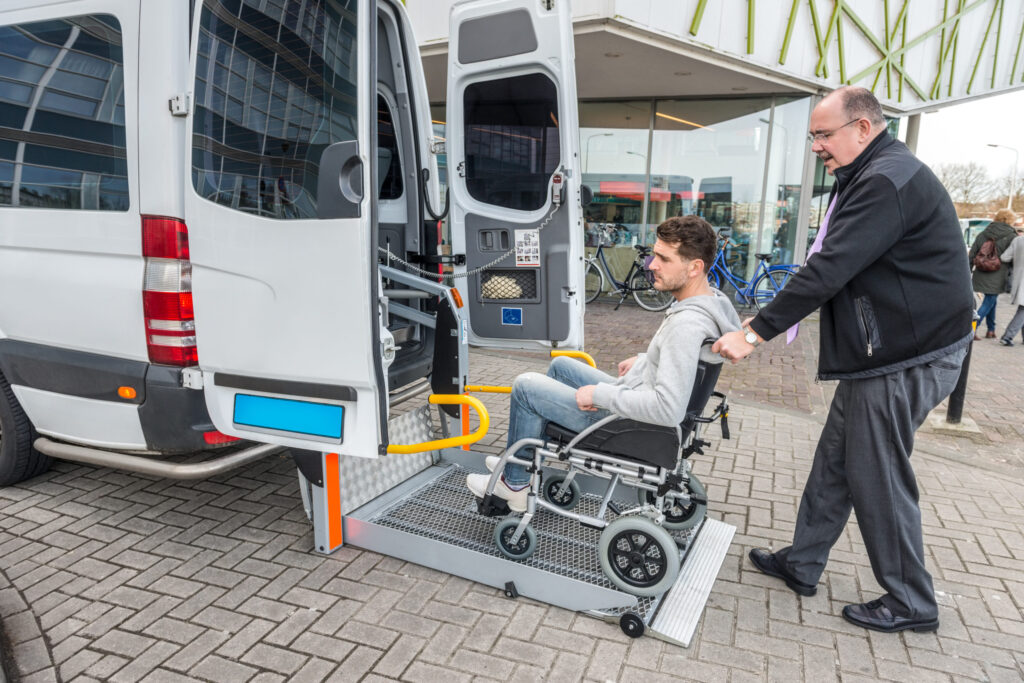
5. Evaluate Driver Courtesy and Patience
A wheelchair trip may require more time than a standard passenger pickup. The driver may need to deploy a ramp, position the wheelchair, apply several restraints, and confirm passenger comfort.
Ask how the provider trains drivers to assist passengers with:
- Limited mobility
- Balance problems
- Communication difficulties
- Memory impairment
- Anxiety about vehicle transfers
- Pain or fatigue
- Special equipment
Look for clear, respectful communication. The driver should explain each step, allow time for questions, and avoid rushing the passenger.
Courtesy also matters at the medical facility. The driver should follow the agreed assistance plan and communicate delays or changes to the caregiver, case manager, or facility contact.
6. Review Reliability for Recurring Appointments
Patients receiving dialysis, physical therapy, rehabilitation, cancer treatment, or other recurring care may need transportation several times each week.
Ask whether the provider can support a recurring schedule. Confirm:
- Pickup windows
- Return pickup procedures
- Advance booking requirements
- Same-day availability
- Dispatch contact information
- Late-arrival procedures
- Cancellation deadlines
- No-show policies
- Backup procedures for vehicle or driver issues
Request written confirmation for recurring trips. Include the appointment time, pickup address, destination, passenger mobility needs, and return instructions.
A reliable provider should record the passenger’s wheelchair details and assistance requirements. This reduces the need to repeat the same information for every ride.
7. Ask About Insurance and Medicaid Coverage
Coverage varies by plan, medical need, transportation type, and authorization requirements. Do not assume that a provider accepts Medicaid or that every medical trip is covered.
Ask your insurance or Medicaid plan:
- Is non-emergency medical transportation included?
- Do I need prior authorization?
- Do I need a medical necessity form?
- Must I use a specific transportation broker?
- Is wheelchair transportation covered?
- Is power or bariatric wheelchair transportation covered?
- Are recurring trips approved in advance?
- Are there copays or other out-of-pocket costs?
- What is the cancellation policy?
Then ask the transportation provider:
- Do you accept this insurance or Medicaid plan?
- Do you work with the plan’s transportation broker?
- Can you help with trip documentation?
- What is the self-pay rate if coverage is denied?
- Are wheelchair rental or additional assistance fees separate?
Keep the plan’s approval number, broker information, and provider confirmation. Coverage questions should be resolved before the scheduled appointment whenever possible.
Raleigh Wheelchair Transportation Comparison Checklist
Use this checklist when comparing providers offering medical transport in Raleigh, NC:
Choose a Provider That Matches the Passenger’s Needs
The best wheelchair transportation provider is not simply the first company with an available van. Choose a provider that confirms vehicle capacity, uses proper securement equipment, trains its drivers, explains the assistance level, and supports the passenger’s appointment schedule.
Ivel 7 Medical Transport provides wheelchair and ambulatory transportation in Raleigh for seniors, people with disabilities, individuals with injuries, and passengers with special needs. Review the company’s about page and services page to learn more about available transportation options.
When you are ready to discuss a trip, use the Ivel 7 Medical Transport booking page. Provide the wheelchair type, dimensions, weight, transfer needs, destination, and required assistance level during the booking process.
Frequently Asked Questions
What should I tell a Raleigh medical transportation provider about a wheelchair?
Provide the wheelchair type, width, length, height, and weight. State whether it is manual, power, or bariatric. Explain whether the passenger can transfer to a vehicle seat or must remain in the wheelchair.
Do wheelchair transportation vehicles use ramps or lifts?
Some vehicles use ramps. Others use lifts. Ask which equipment the provider will use and confirm its weight rating, platform size, and compatibility with the wheelchair.
Can a driver assist a passenger inside a Raleigh hospital or clinic?
This depends on the provider’s service level and the facility’s policies. Ask whether door-through-door assistance is available and where the driver can safely transfer responsibility to facility staff.
Does Medicaid pay for wheelchair transportation?
Medicaid transportation coverage depends on the plan, trip purpose, authorization rules, and transportation broker. Contact the number on the Medicaid card before scheduling and ask whether the selected provider is approved for the trip.