

 8801 Fast Park Dr Suite


Choose a ride based on how your loved one can travel safely today. Consider whether they can walk, transfer into a vehicle seat, stay seated in a wheelchair, or must lie flat. Then confirm the vehicle, equipment, and assistance level with the transportation provider.
This guide covers common options for families planning medical transportation in Raleigh, Durham, and Northeast North Carolina. Availability and service area can vary, so confirm details before booking.
Quick match: Which service may fit?
These categories describe different needs. Bariatric capacity is an equipment requirement, not a separate mobility level. A rider who needs a stretcher may also need specific medical transport arrangements.
1. Independent ambulatory riders
What it can look like: The rider can walk, stand, and sit in a regular vehicle seat without hands-on help. They may no longer drive safely because of age, medication, vision changes, a medical condition, or a temporary restriction after a procedure.
Vehicle and equipment: A standard passenger vehicle may be suitable if the rider can enter and exit safely. Tell the provider about any cane or other mobility aid and ask whether there is room to store it.
Assistance level: Curb-to-curb may work when the rider can reach the vehicle and destination entrance independently. Door-to-door service may be a better fit when the rider needs help getting from the exterior door to the vehicle or entrance. Confirm exactly what the provider includes.
Learn more in our guide to ambulatory transportation and when more support may be needed.
2. Riders using a cane or walker
What it can look like: The rider can sit in a standard seat but needs a cane or walker for balance, or needs extra time and light assistance while boarding. Some riders manage well at home but struggle with steps, long walkways, uneven surfaces, or fatigue after treatment.
Vehicle and equipment: An ambulatory vehicle may be suitable if the rider can safely enter the vehicle and sit upright. Confirm that the walker or cane can be carried securely. If the rider must remain in a wheelchair for the trip, ask about wheelchair service instead.
Assistance level: Ask whether the trip is curb-to-curb, door-to-door, or door-through-door. Door-through-door generally means added assistance beyond the building entrance, but what is offered varies by provider and facility. Do not assume the driver can help with stairs, lifting, or transfers. Explain the specific support needed.
A walker does not automatically mean the rider needs a wheelchair van. Focus on whether they can walk to the vehicle, sit safely, and transfer without undue risk.
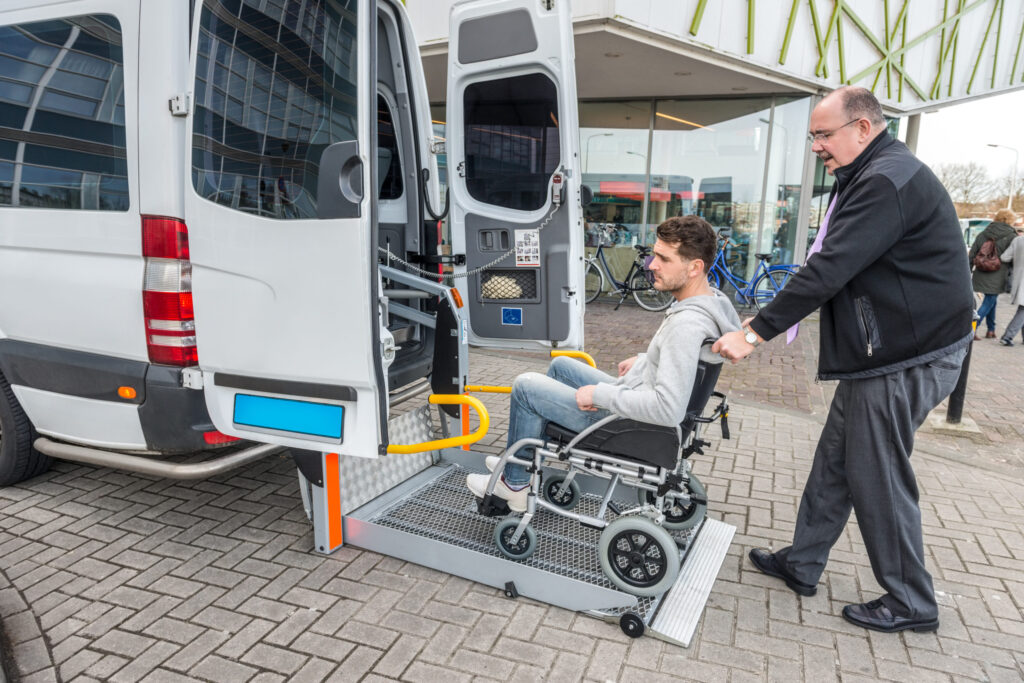
3. Manual and power wheelchair users
What it can look like: The rider uses a wheelchair for some or all movement and may be unable to walk from the home to the vehicle, transfer safely to a regular seat, or remain comfortable without the chair.
Vehicle and equipment: Request wheelchair transportation with a ramp or lift and a system to secure the wheelchair and passenger. A manual chair, power chair, and scooter can differ in width, length, weight, and turning needs. A vehicle described as wheelchair-accessible may not fit every chair.
Before booking, share the device type and, if available, its dimensions and weight. State whether the rider can transfer to a vehicle seat or must remain in the wheelchair. Ask the provider to confirm that the vehicle’s entry, lift or ramp, and securement area can accommodate the rider and device.
Assistance level: Confirm where assistance begins and ends. Ask whether the driver can help from the exterior door, operate the ramp or lift, and assist at the destination. Do not assume that wheelchair access includes lifting or transferring the rider. If a family member or attendant will help, include that in the plan.
For more questions to ask a provider, read our guide to wheelchair transportation in Raleigh.
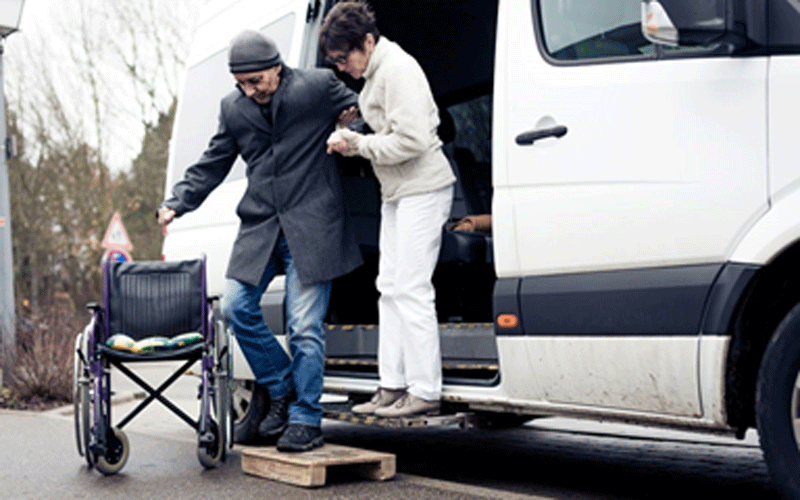
4. Bariatric riders and higher-capacity equipment
What it can look like: A rider may be ambulatory, use a walker, use a wheelchair, or need a stretcher. The key issue is whether the equipment and vehicle can accommodate the rider safely.
Vehicle and equipment: Request confirmation of the actual capacity and dimensions for the vehicle, lift or ramp, wheelchair securement system, or stretcher. Share the rider’s approximate weight and any device measurements the provider requests. Include the combined weight of the rider and wheelchair when relevant. Ask about doorway width, interior space, and access at both pickup and drop-off locations.
Assistance level: Confirm how the rider will board and what help is available. Report stairs, narrow hallways, steep paths, or other obstacles. These details can affect whether a trip is feasible with the available vehicle and crew.
Do not rely on a general statement that a vehicle is accessible. Ask the provider to confirm that the specific equipment and route fit the rider’s needs.
5. Stretcher riders
What it can look like: The rider cannot safely sit upright for the trip and must remain lying flat. This may apply after some procedures or when a clinician determines that sitting is not safe. A wheelchair alone does not indicate a need for stretcher transport.
Vehicle and equipment: Stretcher transport requires the appropriate vehicle, stretcher, securement, and staffing for the trip. The rider’s medical condition and local requirements help determine the right service. In North Carolina, stretcher-bound patient transport generally requires an ambulance permitted for that service. Review the North Carolina Medicaid ambulance policy and confirm arrangements with the health plan, clinician, and transport provider.
Assistance level: Confirm who will help the rider from the bed or residence to the vehicle and from the vehicle to the destination. Describe stairs, elevators, and access limitations. Standard non-emergency transportation is not a substitute for emergency medical care. Call 911 for urgent or unstable conditions.
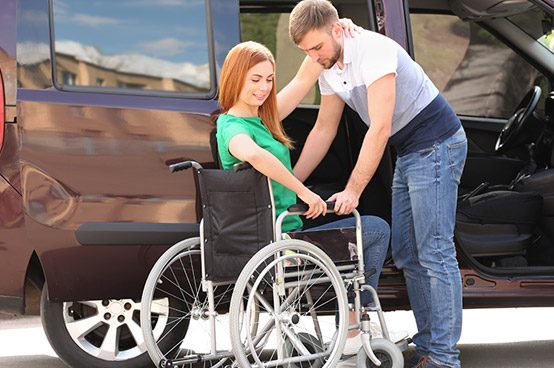
Choose the assistance level, not just the vehicle
These terms can help you describe the trip, but providers may define them differently:
- Curb-to-curb: The rider meets the vehicle at the curb and gets to the destination entrance independently.
- Door-to-door: Assistance is provided between the exterior door and the vehicle or destination entrance, as agreed with the provider.
- Door-through-door: Additional assistance may continue inside a building, when the provider and facility permit it.
State what the rider can do. For example: “They use a walker, can sit in a standard seat, and need help from the residence door to the vehicle.” Clear details help the provider decide what service may fit.
When should you reassess the service?
Review the ride plan if your loved one:
- Has fallen or developed new balance problems.
- Needs more help standing, walking, or transferring.
- Cannot reach the vehicle safely with a cane or walker.
- Starts using a wheelchair or can no longer transfer from it.
- Becomes unable to sit upright for the trip.
- Has new equipment needs or a change in weight or wheelchair dimensions.
- Encounters new access barriers, such as stairs or a longer route to the entrance.
A change does not automatically mean the rider needs a higher level of service. Describe what has changed and ask the provider and healthcare team to help identify a safe option.
Before you book
Share the pickup and destination addresses, appointment time, mobility device, transfer ability, and required assistance. Ask the provider to confirm the vehicle, equipment, service level, and any weight or dimension limits. For coverage questions, contact the health plan or transportation broker before scheduling.
Ivel 7 Medical Transport provides ambulatory and wheelchair transportation services. Contact the team to discuss the rider’s needs, confirm availability, or request a ride. Choose the ride around the person, not the person around the ride.