

 8801 Fast Park Dr Suite

Giving up the car keys can be difficult for a senior and the family. Driving may represent freedom, routine, and control. It may also be part of how a person manages appointments, shopping, church, and time with friends.
Treat the change as a transportation planning issue. Do not treat it as the end of independence.
A senior can remain active when reliable transportation connects them to healthcare and community activities. Use the options below to build a safe plan for medical appointments, errands, and social trips in Raleigh, Durham, and the surrounding Triangle area.
1. Family and Friends
Start with a shared family transportation plan. List relatives, friends, neighbors, and church members who can help. Assign rides based on appointment times and location.
Best for:
- Flexible trips
- Medical visits that require a trusted companion
- Seniors who need help inside the clinic
- Short-notice transportation
- Shopping, church, and social activities
Advantages:
- Familiar driver
- Flexible scheduling
- Direct communication
- Possible assistance during check-in and discharge
- No transportation application
Limitations:
- Family schedules may not match appointment times.
- One person may carry too much responsibility.
- Last-minute cancellations can create a gap.
- A personal vehicle may not fit a wheelchair or mobility device.
- Long-term care needs can become difficult to manage informally.
Create a shared calendar. Record the appointment time, pickup address, destination, mobility needs, and return instructions. Keep at least one backup option for every important medical trip.
2. Public Transit in Raleigh and Durham
Regular bus service can work for seniors who walk safely, manage transfers, and can wait at a stop. Raleigh families can review GoRaleigh services. Durham families can review GoDurham services. GoTriangle connects parts of the Triangle.
Public transit may support routine trips to pharmacies, senior centers, grocery stores, and community activities. Check the route before the first trip. Review walking distances, transfer points, weather exposure, and the location of accessible entrances.
Best for:
- Seniors who can walk to and from stops
- Independent riders
- Routine daytime trips
- Social and community activities
- Families seeking a lower-cost option
Advantages:
- Regular service on established routes
- Accessible buses
- Useful connections across the Triangle
- May cost less than private transportation
- Supports independent travel skills
Limitations:
- Routes may not stop near the home or clinic entrance.
- A senior may need to walk across parking lots or uneven sidewalks.
- Transfers can add time and confusion.
- Service times may not match an appointment.
- Heat, rain, and cold can make waiting unsafe.
- Drivers generally do not escort riders into medical buildings.
Use regular bus service only when the senior can complete the full trip safely. Do not focus only on the bus ride. Include the walk from the home to the stop and from the stop to the destination.
3. Paratransit and County Access Programs
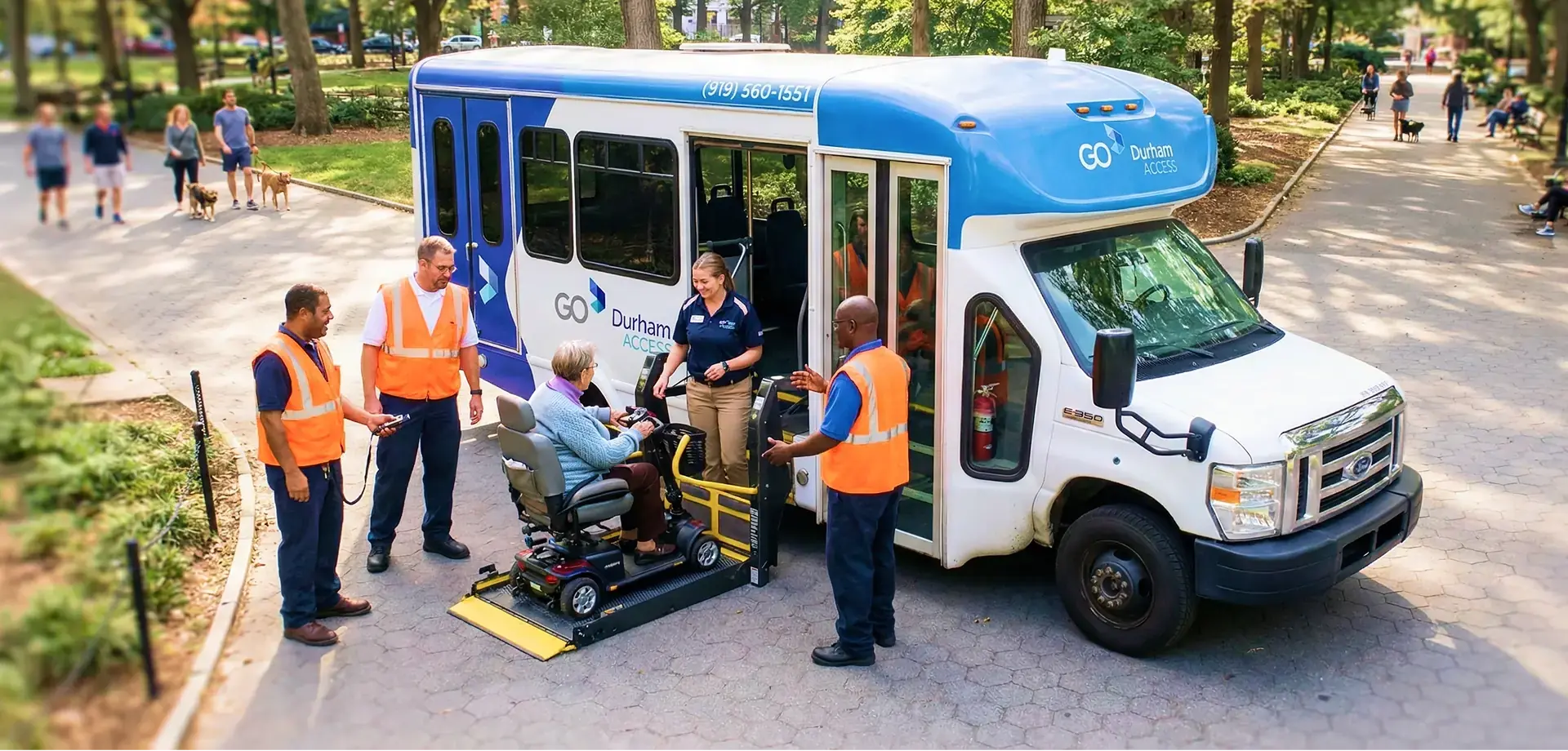
Paratransit can provide a better fit when a disability prevents a senior from using regular bus service. Eligibility rules apply. Apply before the first needed trip.
GoRaleigh Access
GoRaleigh Access provides ADA paratransit for eligible people with disabilities. The trip generally must begin and end within three-quarters of a mile of a GoRaleigh bus route.
Applications require information from the rider and a qualified professional. The City states that trips must be scheduled at least one day in advance. Call 919-996-3459 or review the application instructions before making plans.
GoDurham ACCESS
GoDurham ACCESS includes several programs:
- ADA paratransit for eligible riders with disabilities
- Durham County ACCESS for eligible seniors age 60 and older, people with disabilities, and rural residents
- A Senior Shuttle for participating senior communities
- GoDurham Connect, an on-demand service in North and East Durham
Review the service area, reservation process, and eligibility requirements. Schedule medical trips early. Confirm the pickup window and return trip.
GoWake Access and GoTriangle ACCESS
Families outside the core Raleigh service area can review GoWake Access. It may serve older adults, people with disabilities, rural residents, and some Medicaid recipients.
GoTriangle ACCESS provides regional paratransit for eligible riders in Wake, Durham, and Orange counties. Ask which program applies to the senior’s address and destination.
Best for:
- Seniors with qualifying disabilities
- Riders who cannot safely use fixed-route buses
- Wheelchair users, when the program can accommodate the device
- Planned medical and essential trips
Advantages:
- Accessible vehicles
- Public program oversight
- Lower cost than many private options
- Service designed for riders with disabilities
- Useful for recurring trips when scheduled correctly
Limitations:
- Application and eligibility requirements
- Advance reservation requirements
- Pickup windows instead of exact pickup times
- Shared rides
- Limited service areas and operating hours
- Assistance may be curb-to-curb rather than inside the home or clinic
4. Rideshare Services and Taxis
Rideshare services and taxis can fill short-notice gaps. A family member may need to create the account, book the trip, monitor the ride, and meet the senior at the destination.
Best for:
- Ambulatory seniors
- Short trips
- Social activities
- Evening or last-minute transportation
- Riders who can enter and exit a standard vehicle
Advantages:
- App-based booking
- Flexible service times
- Useful when family or public transportation is unavailable
- Possible direct pickup from the home
Limitations for medical trips:
- Standard vehicles may not fit wheelchairs or larger mobility devices.
- The driver may not provide physical assistance.
- The driver may not escort the rider into the medical facility.
- Wait times and driver availability can change.
- A rider may need help after sedation, a procedure, or difficult treatment.
- The service may not provide the level of supervision a family expects.
Ask the medical office whether the senior will be able to travel alone after the appointment. If the answer is no, arrange a family escort, companion service, or professional NEMT ride instead.
5. Senior Centers and Volunteer Driver Programs
Senior centers may connect older adults with transportation for meals, activities, shopping, or community programs. Some programs focus on medical appointments. Others provide only limited weekly service.
Durham families can review transportation information from the Durham Center for Senior Life. In Wake County, review the Resources for Seniors transportation information and ask about current availability.
Volunteer programs may also help. Options can include:
- Center for Volunteer Caregiving
- Aging Forward Durham
- Local faith-based transportation programs
- Community senior center programs
- Volunteer services listed through county aging agencies
Best for:
- Seniors with predictable appointments
- Riders who benefit from a familiar volunteer
- Families with limited transportation budgets
- Social, grocery, and essential trips
Advantages:
- Low-cost or no-cost options may be available
- Personal driver interaction
- Community connection
- Possible door-to-door support
- Helpful backup for family caregivers
Limitations:
- Limited driver availability
- Advance notice requirements
- Waiting lists
- Service-area restrictions
- No guarantee for every appointment time
- Volunteer drivers may not be able to assist with transfers or complex mobility needs
Call before relying on a volunteer program for a recurring treatment. Confirm whether the program can provide round trips, wheelchair transportation, and help at the destination.
6. Professional Senior Transportation and NEMT
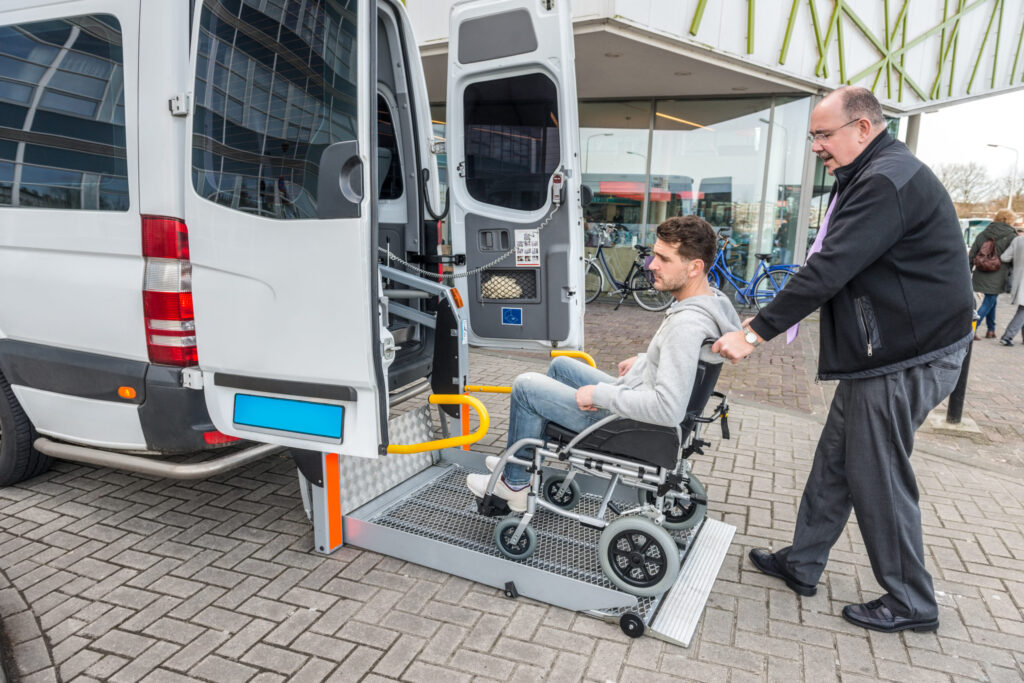
Professional transportation may be the most practical option when medical care is the priority. Non-emergency medical transportation, or NEMT, is designed for scheduled healthcare trips that do not require an ambulance.
Use NEMT for:
- Doctor appointments
- Dialysis
- Physical therapy
- Rehabilitation
- Hospital admission or discharge
- Specialist visits
- Recurring treatments
- Wheelchair-accessible transportation
Best for:
- Seniors with mobility limitations
- Wheelchair users
- Patients with recurring treatments
- Riders who need door-to-door support
- Families who cannot provide every ride
- Healthcare facilities arranging patient transportation
Advantages:
- Medical transportation focus
- Scheduled service
- Vehicles designed for different mobility needs
- Wheelchair-accessible options
- Door-to-door assistance
- Better fit for recurring healthcare travel
Limitations:
- Private service may have a fee.
- Advance booking may be required.
- Coverage depends on the rider’s insurance or program eligibility.
- Service levels differ between providers.
- NEMT is not a substitute for emergency medical care.
At Ivel 7 Medical Transport, services include transportation for doctor appointments, dialysis, hospital admission and discharge, physical therapy, rehabilitation, and other non-emergency medical trips. The company also provides wheelchair-accessible and door-to-door transportation options.
Ask these questions before booking:
- Can the vehicle accommodate the senior’s wheelchair or mobility device?
- Does the driver provide door-to-door assistance?
- Can the provider handle recurring appointments?
- What pickup window should the family expect?
- Can a family member or caregiver ride along?
- What information is required at booking?
- What is the cancellation policy?
- Is insurance, Medicaid, or private payment accepted?
Book a ride with Ivel 7 Medical Transport when a planned medical trip requires a dependable transportation plan.
How to Build a Reliable Weekly Plan
Use more than one transportation option. A practical plan may look like this:
- Medical appointments: Professional NEMT or paratransit
- Dialysis or recurring treatment: Prearranged recurring NEMT
- Shopping: Family, senior shuttle, public transit, or volunteer driver
- Social activities: Family, rideshare, senior center transportation, or public transit
- Short-notice needs: Family, taxi, or rideshare
- Wheelchair trips: Confirm accessible vehicle availability before booking
Record each provider’s phone number, service area, reservation deadline, cost, and cancellation rules. Review the plan after the first two trips. Adjust it if the senior must walk too far, wait too long, or travel without needed assistance.
Final Checklist for Raleigh-Durham Families
Use this checklist before the senior stops driving:
- Identify the senior’s walking and mobility needs.
- List all regular medical appointments.
- Check public transit and paratransit eligibility.
- Apply for access programs early.
- Contact volunteer and senior center programs.
- Compare private transportation providers.
- Confirm wheelchair or walker requirements.
- Plan a backup for every important appointment.
- Share the schedule with family members.
- Reassess the plan after each ride.
The goal is not to replace driving with one single service. The goal is to create dependable connections to healthcare, errands, and community life. When transportation works, a senior can continue participating in daily routines without needing to drive.